Oct 07, 2026

Author : Dr. Nitu Verma (P.T)

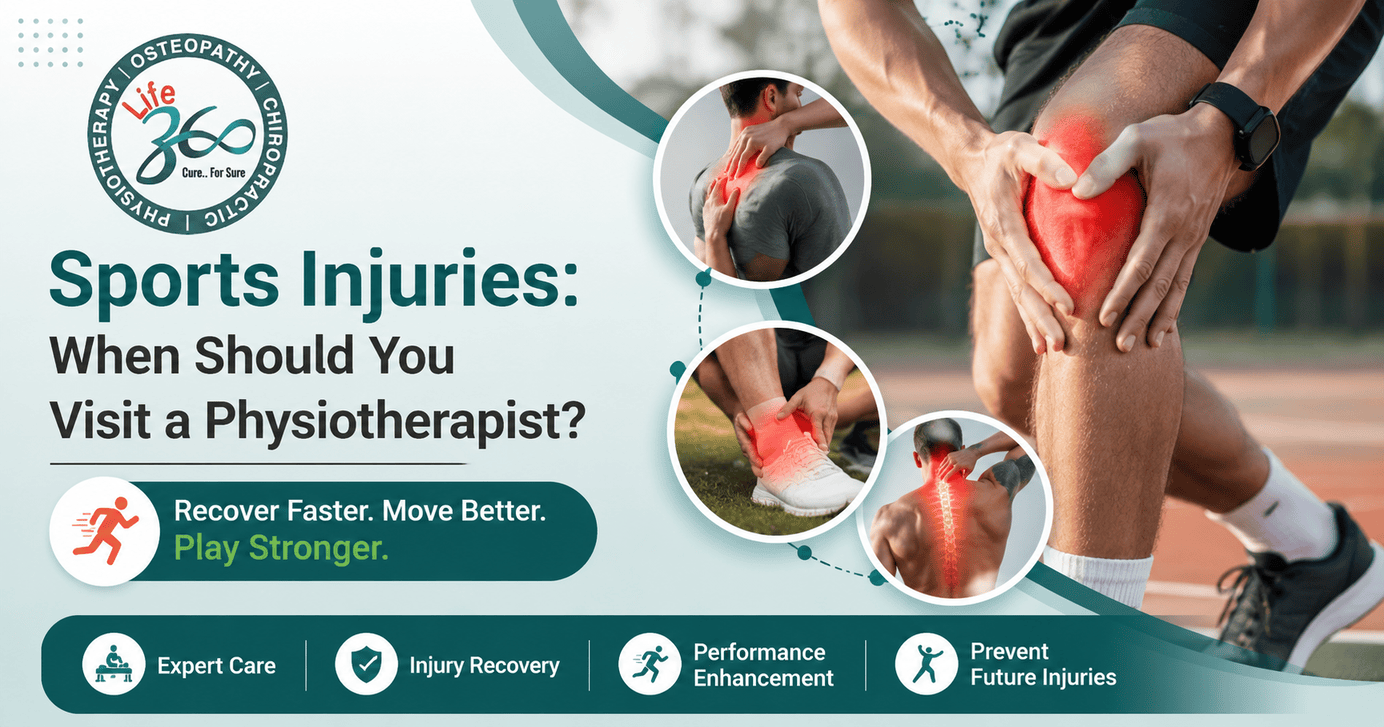
Two weeks after a hamstring strain the pain has gone. Walking is normal. A light jog feels fine. So the player tells the coach he's available.

Three minutes into the second half the same hamstring goes again, and worse than the first time.
Most sports injury treatment in Raipur reaches me at exactly this point, after somebody has already gone back too early. I see it every season on grounds across the city, and it comes from one misunderstanding. Pain leaving tells you almost nothing about whether the tissue can take a sprint.
Healing runs ahead of strength. Strength runs ahead of the control your nervous system needs to manage a full-speed turn or a landing. That gap, between comfortable and ready, is where nearly every re-injury lives.
We close that gap with testing rather than with optimism and a thumbs up.

Should I still use RICE for a sports injury?

No. Rest, ice, compression and elevation is no longer the standard advice, and complete rest past the first day or two now looks like part of the problem rather than the fix.
Most of us learned RICE. Sports medicine has moved on, and the reasoning is worth understanding rather than just accepting.
Complete rest is harmful past the first day or two. Tissue adapts to load. Take the load away and it weakens fast, and muscle is lost within days. The approach now is protected, progressive loading. Move early, inside pain limits, instead of strapping it up and sitting still for a fortnight.
Ice gets treated more cautiously than it used to. It reduces pain in the first days, which is worth something. But inflammation is part of how the tissue repairs, and there's a real argument about whether heavy icing slows that down. So ice for comfort, briefly. Don't think of it as treatment.
The frameworks that replaced RICE put the emphasis on protection and sensible loading in the first days, then progressive loading, honest timelines, and exercise as the main thing that gets done.
In plain terms: keep moving, stay out of sharp pain, load the tissue at a level it can handle, and keep raising that level.

What sports injuries are most common in Raipur?

Hamstring strains, ankle sprains, shoulder problems in bowlers and throwers, and lower back pain from gym lifting make up most of the sports physiotherapy Raipur players actually need. Here is what walks through the door in Shankar Nagar, sport by sport.

Cricket

Fast bowlers get lower back stress injuries, especially teenagers and young adults, plus shoulder and side strains. Bowling workload is a real clinical problem, and a sudden jump in overs bowled is closely tied to getting injured.
Batsmen get hamstring strains running between wickets, side strains, and hand injuries.
Fielders get throwing shoulders, ankle sprains, and shoulder and wrist damage from diving.
Cricket injury treatment in Raipur is mostly these three groups, and each one needs a different rehab plan even when the sore spot looks the same.

Football

ACL and MCL injuries, ankle sprains, hamstring and groin strains, and quadriceps contusions.

Badminton and racquet sports

Shoulder impingement, tennis elbow, ankle sprains from lunging, and knee pain from decelerating over and over.

Gym and weights

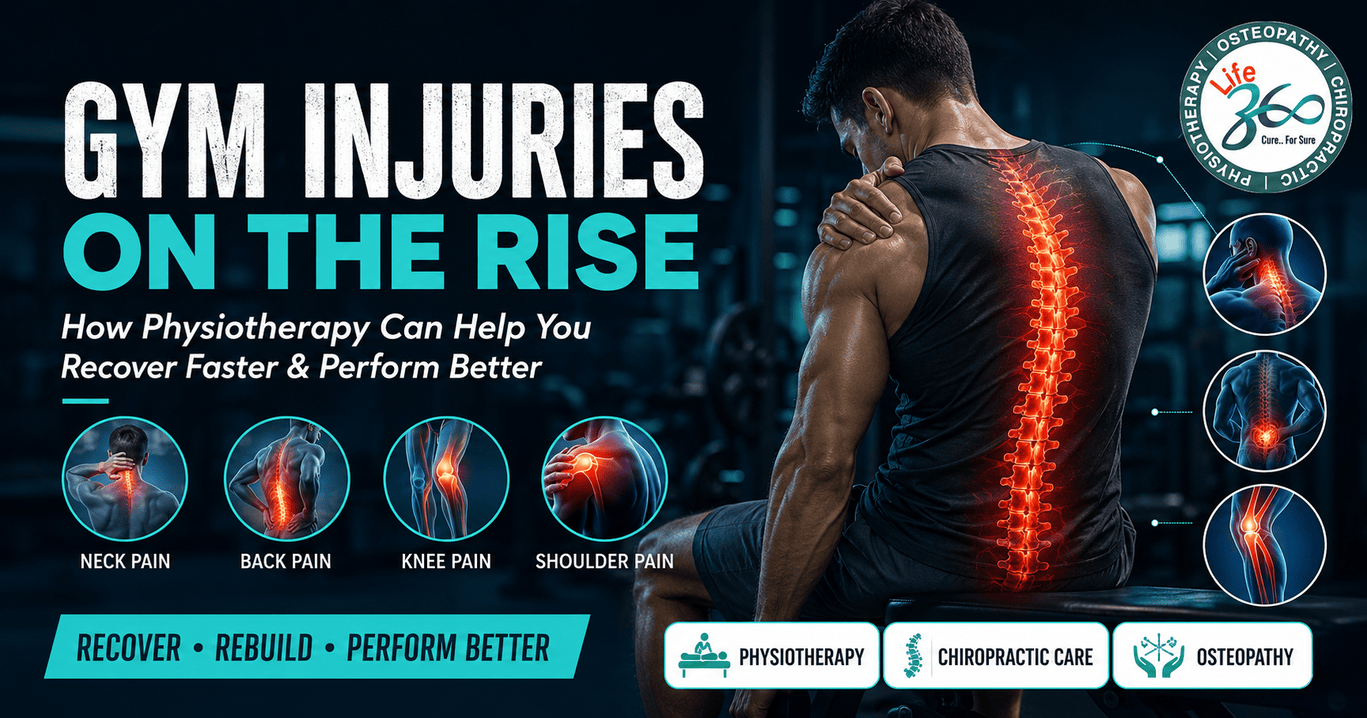
Lower back strain from lifting technique, shoulder impingement from too much pressing, knee pain from squat mechanics. Gym injuries have gone up here as the fitness centres have multiplied, and most of them come from load climbing faster than technique.
Which is my complaint about the gym scene in Raipur, so let me get it out of the way. Somebody joins in January, gets given a programme built for a body that trains four days a week, and is loading heavy by the third week because the trainer wants visible progress before the membership lapses. The injury usually shows up around week six. I could set my watch by it.

Running

Shin pain, Achilles problems, plantar heel pain, and knee pain at the front or the outer side. Almost always after a sudden increase in distance or intensity.

Why does the same injury keep coming back?

Because the athlete returned before strength came back, and because whatever caused the injury in the first place was never treated. Recurrence in some injuries, hamstrings above all, is high. The reasons repeat themselves and every one of them is fixable.
Going back too soon. Scar tissue forms within weeks, and it keeps building strength for months afterwards.
Strength deficits that were never sorted out. Test the two sides and there's often still a clear difference long after the pain went.
The cause was never dealt with. A hamstring strained because of poor hip control, or because of a jump in training load, will strain again if all anyone treated was the hamstring. Hamstring strain treatment that stops at the hamstring is the most common reason a player pulls up twice in one season.
No eccentric work. Muscles tear most often while lengthening under load, and rehab that leaves eccentric loading out sends the player back weak in exactly the position that broke them.
Fatigue. Most injuries happen late in a match or late in a session. Rehab that never gets the athlete tired never tests the state in which the injury actually occurs.

What does a sports injury assessment involve?

Six things: what you were doing when it happened, what changed in your training beforehand, a hands-on examination, measured strength on both sides, functional testing, and a look at the joints above and below. Written return-to-play criteria come out of it on day one.
Mechanism first. What exactly were you doing, and what did you feel. That question alone narrows things down more than most scans do.
Training load history. What changed in the weeks before. A new gym programme, extra bowling, a tournament, coming back after exams. Load spikes are the single most common contributor and almost nobody gets asked about them, which still surprises me.
Structural examination. Palpation, range of movement, specific tests for whichever tissue is suspected.
Strength testing, both sides, measured rather than eyeballed.
Functional testing. Squat, single-leg squat, hop, how they land.
Kinetic chain. A bowler's shoulder gets assessed with the thoracic spine and the hip. An ankle gets assessed with hip strength. Ankle sprain physiotherapy in Raipur that skips the hip is why so many people sprain the same ankle three times. The painful spot is rarely the whole story.
And return-to-play criteria written down on day one, so the athlete knows what they're working towards instead of waiting for somebody's permission.

How does treatment progress?

In six stages, each one unlocked by what the athlete can do rather than by how many weeks have passed.
Early on, protect and load. Protection without immobilising. Pain-free movement started early. Isometric loading, which often takes pain down in tendon injuries. Swelling managed.
Then range and basic strength. Manual therapy for stiffness and restriction, soft tissue work and dry needling where muscles are guarding, and the start of proper resistance work.
Then strength and capacity. Progressive loading with a deliberate eccentric component. Kinetic chain strengthening, so hips and trunk for lower limb injuries, thoracic spine and scapula for upper limb. These are the sports injury exercises that do the real work, and they are the ones people skip.
Then power and speed. Plyometrics, sprint mechanics for running injuries, change of direction brought in step by step.
Then sport-specific work, reproducing the real demands. Bowling run-ups built up over weeks. Throwing programmes with distance and volume progressed. Lunging and overhead patterns for racquet players.
Then testing. Strength symmetry, hop tests, movement quality when tired, and a graded return to training completed without symptoms. Return to play testing is the step that separates an athlete who feels fine from one who is actually ready.
And then prevention, which carries on after the return and deals with the deficits that caused the injury. This is the part that gets dropped the moment the player feels good, and dropping it is why I see the same athletes twice.

What is load management and why does it matter?

Load management means controlling how fast your training changes, not how much of it you do. Injury risk has less to do with how much you train and more to do with how quickly you changed it.
A bowler who has been bowling ten overs a week and suddenly bowls thirty is at far higher risk than one who has bowled thirty every week for a year. Same for running distance, gym volume and how many matches you play.
So:
  • Raise volume gradually instead of in jumps
  • Take extra care coming back after a break, pre-season, after exams, after illness, after a gap between tournaments
  • Build a steady base rather than training hard in short violent bursts
  • Treat a sudden chance to play more, a tournament, a new team, as a load spike that needs preparing for
Injury prevention through a Raipur cricket season is largely this one principle, applied by people who find it boring.

Heat, which matters here more than most places

Our summers change the risk picture. Dehydration drops muscle performance and goes along with cramping and strain. Playing in extreme heat brings fatigue on earlier, and fatigue is when injuries happen.
Sports physiotherapy in Raipur has to plan around the hot months, because the same session that was safe in December is not the same session in May.
So hydration before, during and after. Training scheduled sensibly in the hot months. And knowing when tiredness has crossed into something unsafe, which younger players are terrible at judging and which coaches should be judging for them.

The part athletes don't want to hear

Sometimes I have to say you're not ready, and the match is on Sunday, and you feel fine.
That conversation is the least popular thing I do. I've had players go back against my advice and get away with it, and I've had players go back against my advice and lose the rest of their season. I can't always tell you which one you'll be. What I can tell you is where your numbers sit against the other leg, and how many people I've watched make that same bet.

Where can I get sports injury treatment in Raipur?

Dr. Nitu Verma (PT) treats sports injuries at Life 360 Physiotherapy Center in Shankar Nagar, Raipur. The practice combines a physiotherapy foundation with chiropractic and osteopathic training.
Rehab here progresses on measured criteria rather than on how many weeks have passed, and we treat the whole chain instead of the sore part. Athletes looking for the best physiotherapy for sports injury in Raipur should ask any clinic one question before booking: what test will tell me I'm ready to play again. If there is no answer, keep looking.

Book a sports injury assessment

If the injury happened yesterday, or if it happens every single season, an assessment will find the injured tissue and the reason it got injured. Sports injury treatment in Raipur starts with that second half of the answer.
Life 360 Physiotherapy Center
HIG-16, Sector 1, Shankar Nagar, Raipur, Chhattisgarh 492007
Also at Life360 Chiropractic Centre, Smriti Nagar, Bhilai
Bring any scan reports and the details of your current training schedule. Dr. Nitu Verma (PT) sees athletes at Life 360 Physiotherapy Center, Shankar Nagar, Raipur, and the first visit is an assessment rather than a treatment session.

Questions athletes ask

Should I ice a sports injury?
Ice can reduce pain in the first day or two, which is useful. It isn't considered a treatment that speeds healing, and long periods of icing may not help. Protected, progressive movement matters more.
Is complete rest good for a sports injury?
Past the first day or two, generally no. Tissue weakens without load and muscle is lost quickly. Controlled loading within pain limits gives better results.
Why do hamstring injuries keep coming back?
Return before strength is restored, no eccentric strengthening, and contributing factors like hip control and training load spikes left unaddressed. Hamstring strain treatment has to include all three or the injury repeats.
How do I know when I'm ready to return to sport?
Objective testing. Strength symmetry, hop and functional test results, movement quality when fatigued, and a graded return to training completed without symptoms. Absence of pain on its own doesn't answer the question.
What is load management?
Controlling how fast training volume and intensity change. Sudden increases relative to what you're used to are closely linked with injury, more so than a high training load you've built up to.
Which exercises help a sports injury?
It depends on the tissue and the stage. Early on, isometric holds and pain-free range work. Later, progressive resistance with a deliberate eccentric component, then hopping, sprinting and change of direction. Sports injury exercises copied off a video without a stage check are how people get worse.
Can physiotherapy help gym injuries?
Yes, and it usually means correcting the technique and the progression that caused it rather than only treating the sore tissue. Otherwise the same injury comes back.
Do young cricketers need different management?
Yes. Adolescent growth plates are vulnerable to repetitive loading, especially in fast bowlers, where lower back stress injuries are a known risk. Bowling workload guidance for young players exists for a reason and it should be followed. Cricket injury treatment in Raipur for a fifteen-year-old bowler is not the same plan as for a twenty-five-year-old.
Where do I find a sports injury doctor in Raipur?
Look for someone who measures strength on both sides, asks about your training load, and gives you written return-to-play criteria. Dr. Nitu Verma (PT) runs sports injury treatment in Raipur from Life 360 Physiotherapy Center in Shankar Nagar.
How long does a typical sports injury take to recover?
It varies a lot. A mild ankle sprain may be two to four weeks, a moderate hamstring strain six to twelve, a ligament reconstruction nine to twelve months. The tissue type and the grade of injury decide the timeline far more than how hard you attack the treatment.
 
Go to Top