Life 360 Physiotherapy Center, HIG-16, Sector 1, Shankar Nagar, Raipur, Chhattisgarh 492007
-
For Appointment: 09115719395 , 07000784644 , 07714908010
-

At Life 360 Physiotherapy Center, led by Dr. Nitu Verma, India’s first lady chiropractor, we are dedicated to delivering top-quality chiropractic and physiotherapy care. Recognized as the best chiropractor in India, Dr. Verma specializes in holistic treatments for pain relief, spinal alignment, and sports injury rehabilitation. Our clinic in Raipur provides personalized care designed to address the root causes of discomfort and restore balance to your body, helping you achieve long-term health and wellness. Experience relief and recovery with India’s leading chiropractic expert at Life 360 Physiotherapy Center.
For Appointment: 09115719395 , 07000784644 , 07714908010
-poster-081941.png)
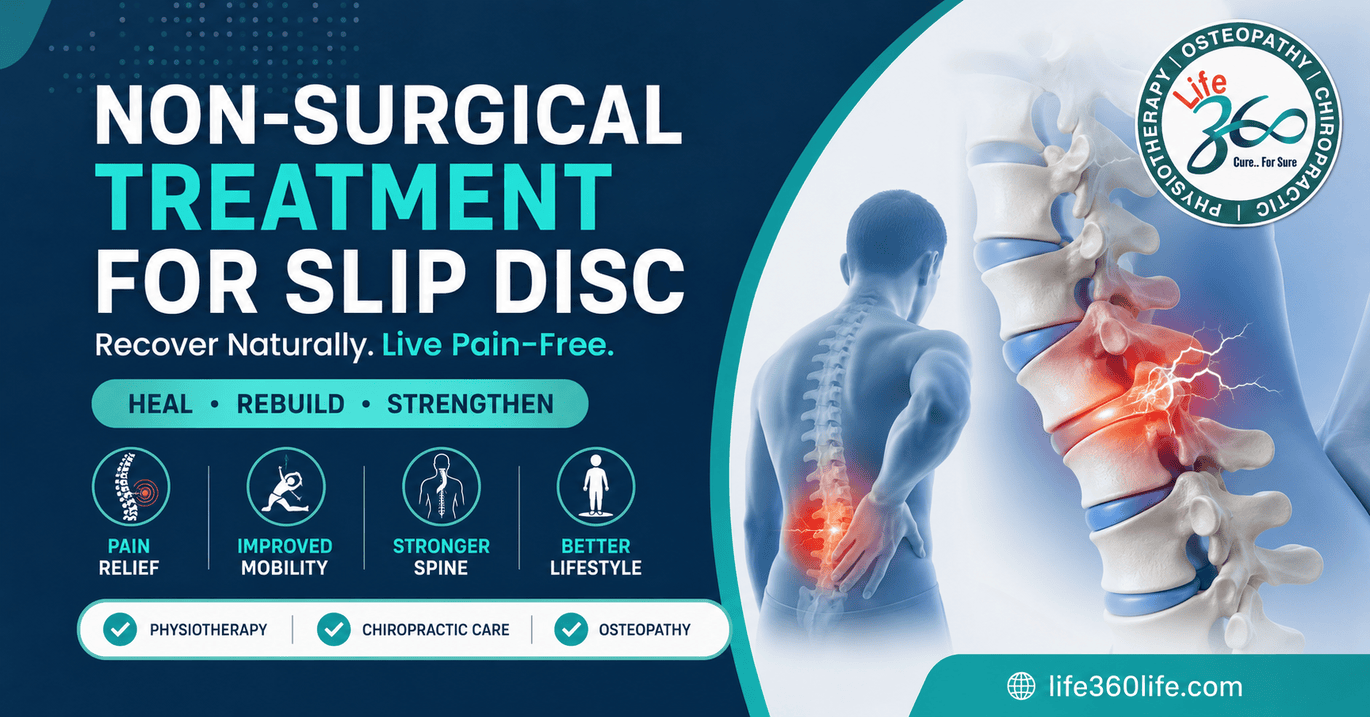
Quick Answer: A slipped disc (herniated disc) occurs when the soft inner core of a spinal disc pushes out through its outer layer and presses on nearby nerves. Around 90% of slipped disc cases heal without surgery through chiropractic spinal correction, physiotherapy, decompression techniques, and structured exercise. In Raipur, Chhattisgarh, Life 360 Physiotherapy Center in Shankar Nagar — led by Dr. Nitu Verma, India's first lady chiropractor — specializes in non-surgical slipped disc treatment. Call 09115719395 for an appointment.
Few diagnoses frighten patients as much as hearing "you have a slipped disc." Many immediately assume surgery is inevitable. Here is the truth every patient in Raipur and Chhattisgarh deserves to know: most slipped discs heal naturally when given the right treatment and environment. The disc does not actually "slip" out of place — it bulges or leaks, and with correct spinal mechanics, the bulge can shrink and symptoms can resolve completely.
Direct Answer: A spinal disc is a cushion between two vertebrae, with a soft jelly-like center (nucleus pulposus) and a tough outer ring (annulus fibrosus). A "slipped disc" means the soft center has bulged or leaked through the outer ring, irritating or compressing nearby spinal nerves.
Doctors use different terms depending on severity:
|
Term |
What It Means |
Severity |
|---|---|---|
|
Disc Bulge |
Disc protrudes slightly but outer ring is intact |
Mild |
|
Disc Protrusion / Herniation |
Inner core pushes through a tear in the outer ring |
Moderate |
|
Disc Extrusion |
Inner material leaks out beyond the disc |
Severe |
|
Sequestration |
A fragment breaks free into the spinal canal |
Most severe |
The most commonly affected levels are L4-L5 and L5-S1 in the lower back, and C5-C6 and C6-C7 in the neck.
Direct Answer: A lumbar slipped disc causes lower back pain radiating into the buttock and leg (sciatica), with tingling, numbness, or weakness. A cervical slipped disc causes neck pain radiating into the shoulder, arm, and fingers.
Lower back pain that worsens on sitting, bending, coughing, or sneezing
Radiating leg pain (sciatica) — often more troubling than the back pain itself
Tingling, "pins and needles," or numbness in the leg or foot
Muscle weakness — difficulty lifting the foot or gripping with the hand (cervical disc)
Neck pain radiating into the arm with tingling fingers (cervical herniation)
Relief on lying down; pain on prolonged sitting or standing
Direct Answer: The main causes are repeated forward-bending stress, incorrect heavy lifting, prolonged sitting with poor posture, sudden twisting injuries, age-related disc dehydration, obesity, smoking, and weak core muscles.
In our Raipur clinic, we most commonly see slipped discs in office workers who sit 8–10 hours daily, gym enthusiasts lifting with the wrong form, drivers absorbing road vibration for years, and workers who lift loads by bending their backs. Across Chhattisgarh's industrial belt — Bhilai, Korba, Raigarh — occupational lifting injuries are a major contributor.
Direct Answer: Yes. Research shows that most disc herniations shrink or reabsorb naturally over time — a process called spontaneous disc resorption. Studies report that even large extrusions can reduce significantly within months when supported by correct conservative treatment. Surgery is required in fewer than 10% of cases.
This is why leading spine experts worldwide recommend 6–12 weeks of structured non-surgical care before even discussing surgery — unless there are red flags like progressive weakness or bladder involvement.
Dr. Nitu Verma uses precise, gentle adjustment techniques to restore spinal alignment, open the disc spaces, and reduce mechanical pressure on the herniated segment — creating the ideal environment for the disc to heal.
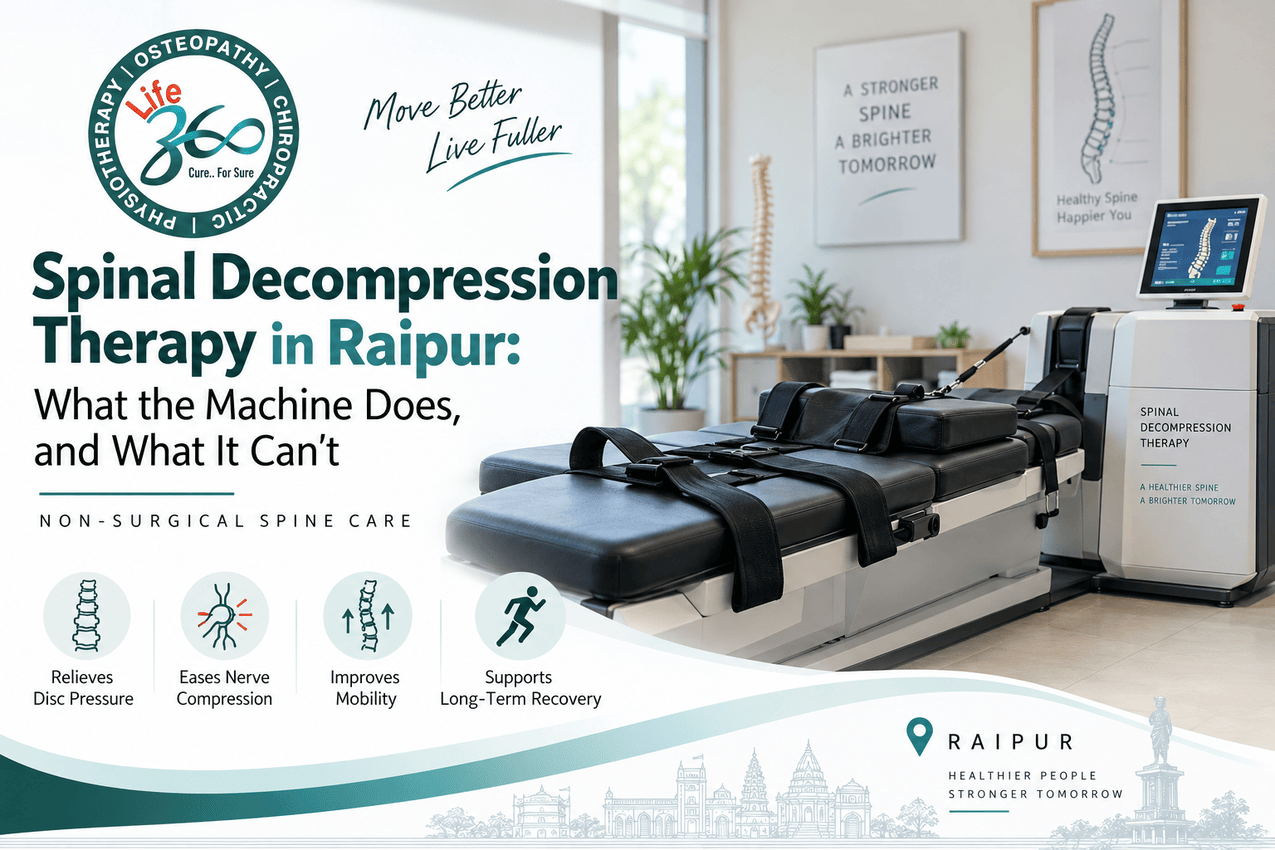
Controlled decompression gently separates the vertebrae, reducing pressure inside the disc and encouraging the bulged material to retract away from the nerve.
Direction-specific exercises that centralize the pain — moving it out of the leg and back toward the spine — a proven indicator of disc recovery.
Releases the protective muscle spasm around the injured segment, restoring normal movement and reducing pain.
Deep core muscles (transversus abdominis, multifidus) act as the spine's natural belt. Strengthening them protects the healing disc and prevents future herniations.
We retrain how you sit, stand, lift, and sleep — because a healed disc stays healed only when daily mechanics are corrected.
Direct Answer: Most patients improve significantly within 4–6 weeks of structured treatment. Complete recovery of a moderate herniation typically takes 8–12 weeks. Severe cases may need 3–6 months. Pain reduction usually begins within the first 2 weeks of correct treatment.
Direct Answer: Avoid forward bending, lifting weights, prolonged sitting beyond 30 minutes, sit-ups and toe-touching exercises, soft sofas and mattresses, sudden twisting, and long two-wheeler rides during the recovery phase.
Direct Answer: Surgery becomes necessary only with: progressive muscle weakness or foot drop, loss of bladder or bowel control (cauda equina syndrome — an emergency), unbearable pain not responding to 6–12 weeks of proper conservative treatment, or repeated disabling recurrences.
If you have been advised disc surgery, we strongly encourage a second opinion. Many of our patients across Chhattisgarh avoided surgery entirely after completing our structured protocol.
Life 360 Physiotherapy Center
Address: HIG-16, Sector 1, Shankar Nagar, Raipur, Chhattisgarh 492007
Phone: 09115719395 | 07714908010 | 07000784644
Timing: 11:00 AM – 6:00 PM
Website: https://life360.co.in
Q1. Can a slipped disc be cured without surgery in Raipur?
Yes. Around 90% of slipped disc cases recover fully with non-surgical treatment — chiropractic correction, decompression, physiotherapy, and core strengthening — available at Life 360 Physiotherapy Center, Shankar Nagar, Raipur.
Q2. Does a slipped disc heal permanently?
Yes. Herniated disc material can shrink and reabsorb naturally. With corrected posture and a strong core, most patients return to completely normal life.
Q3. Is chiropractic adjustment safe for a herniated disc?
Yes, when performed by a qualified expert. Dr. Nitu Verma uses gentle, disc-safe techniques — not forceful manipulation — tailored to the stage of your herniation.
Q4. How do I know if my back pain is a slipped disc?
If your back pain radiates down the leg with tingling or numbness, and worsens on sitting or bending, a disc problem is likely. Clinical tests confirm the diagnosis.
Q5. Is walking good for a slipped disc?
Yes. Short, frequent walks on level ground promote disc nutrition and healing. Avoid jogging, jumping, and uneven terrain during recovery.
Q6. Which exercises are dangerous with a slipped disc?
Avoid toe-touching, sit-ups, crunches, heavy squats, and deadlifts until cleared. Wrong exercises can push the disc material further onto the nerve.
Q7. What is the difference between disc bulge and disc herniation?
A bulge means the disc protrudes but its outer ring is intact; a herniation means the inner core has broken through the ring. Bulges generally heal faster.
Q8. How should I sleep with a slipped disc?
On your back with a pillow under the knees, or on your side with a pillow between the knees, on a medium-firm mattress.
Q9. Can a slipped disc cause permanent nerve damage?
Only if severe compression is ignored for a long time. Early treatment prevents permanent damage — do not delay if you notice weakness or numbness.
Q10. Do painkillers cure a slipped disc?
No. Painkillers only mask symptoms. The disc heals through decompression, correct movement, and strengthening — not medication.
Q11. What is the cost of slipped disc treatment in Raipur?
It depends on severity and sessions needed, but non-surgical treatment costs a small fraction of spine surgery. Call 09115719395 for consultation details.
Q12. Can young people get a slipped disc?
Yes — in fact, slipped discs are most common between ages 25 and 45, when the disc core is still soft enough to herniate under pressure.
Q13. Is MRI necessary for slipped disc treatment?
MRI confirms the level and size of herniation, but treatment decisions are based on clinical findings. Many patients begin treatment based on examination alone.
Q14. Where can I get non-surgical slipped disc treatment in Chhattisgarh?
Life 360 Physiotherapy Center, HIG-16, Sector 1, Shankar Nagar, Raipur — patients visit from Bhilai, Durg, Bilaspur, Korba, and across Chhattisgarh. Phone: 09115719395.
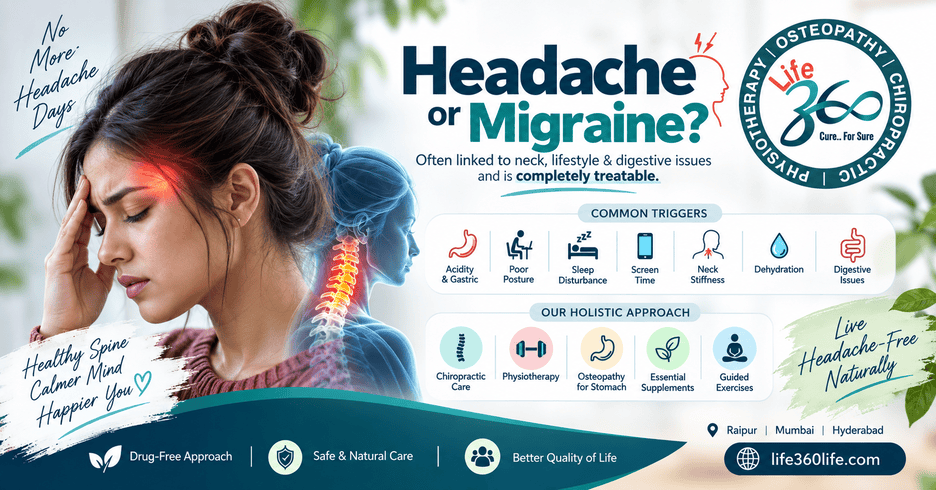
Dec 05, 2024

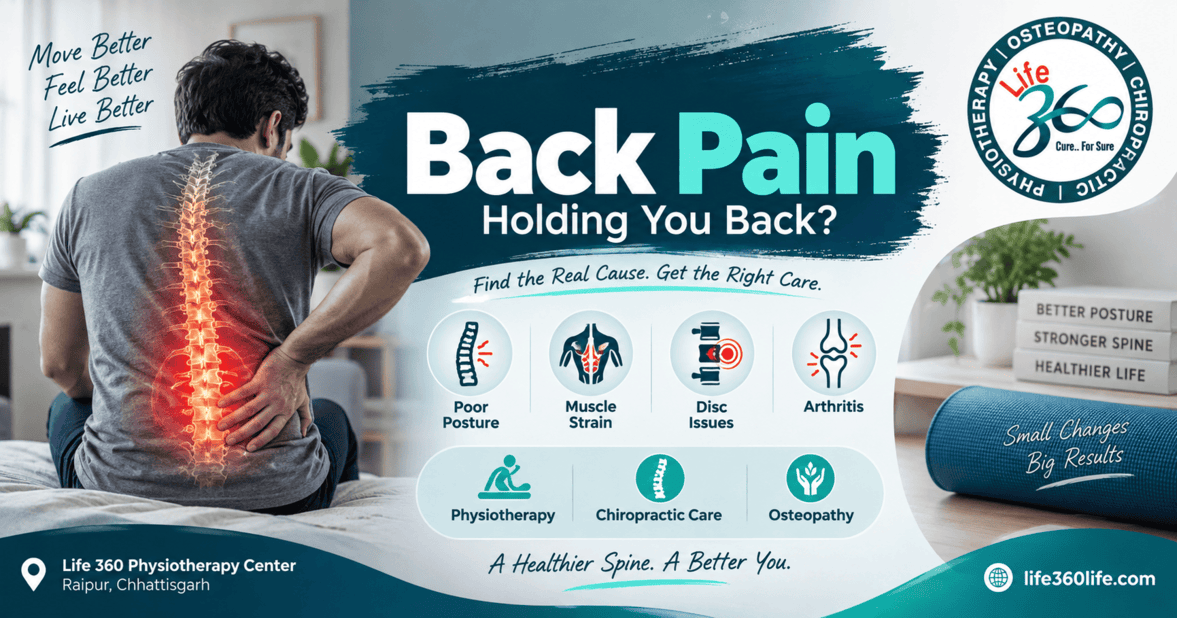
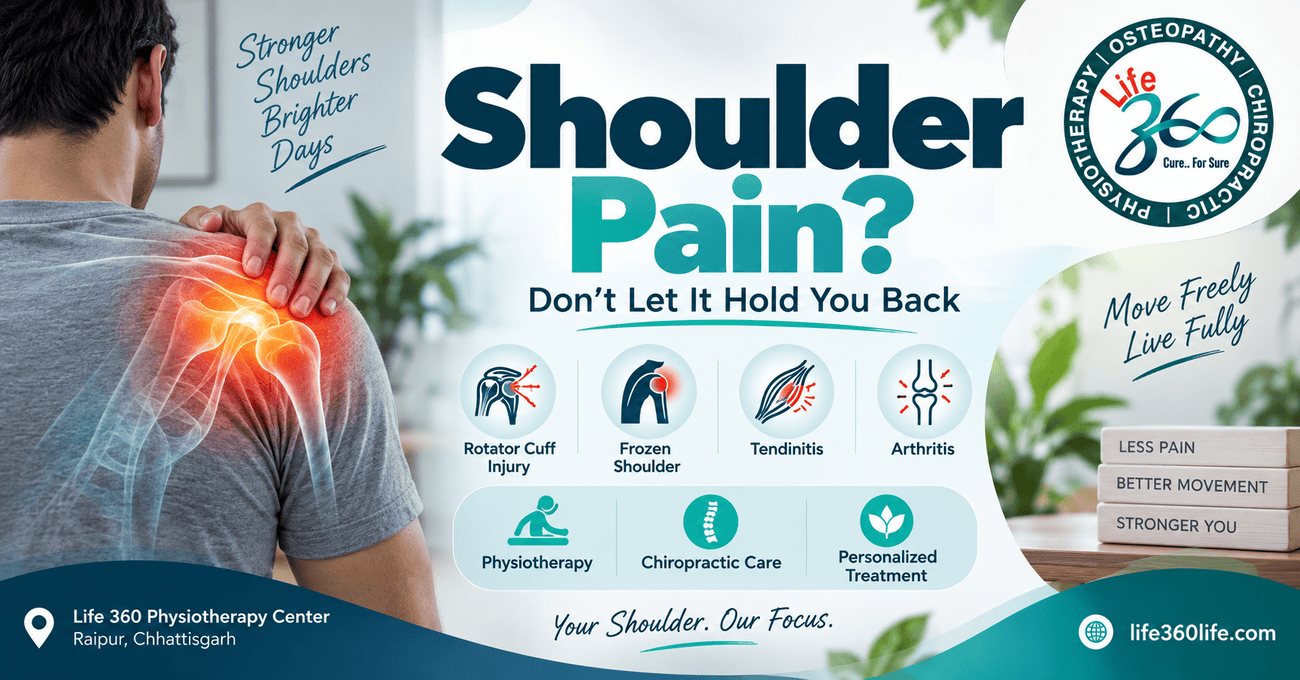
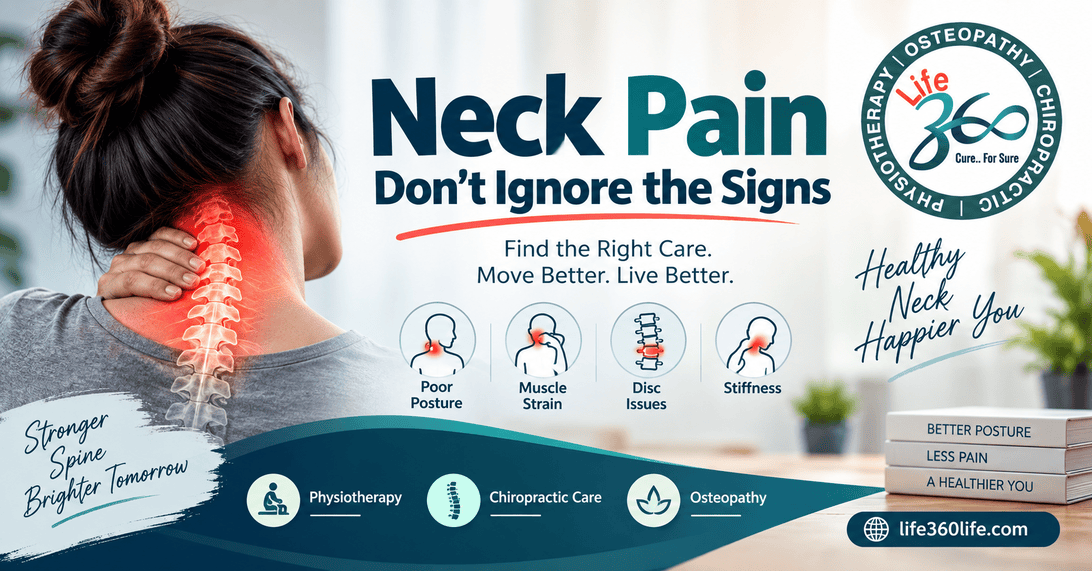
:-early-warning-signs-you-should-never-ignore-icon-044150.png)
-icon-054426.png)
-icon-080621.png)
-icon-092359.png)
-icon-093248.png)
-icon-093852.png)
-icon-094609.png)
-icon-095238.png)
-icon-103429.png)
-icon-103224.png)
-icon-104305.png)
-icon-074623.png)
-icon-075551.png)
-icon-080620.png)
-icon-081325.png)
-icon-082141.png)
-icon-083016.png)
-icon-085607.png)
-icon-090354.png)
-icon-091256.png)
-icon-092441.png)
-icon-093257.png)
-icon-094048.png)
-icon-094827.png)
-icon-095622.png)
-icon-092325.jpg)
-icon-100332.png)
-icon-101125.png)
-icon-101922.png)