Life 360 Physiotherapy Center, HIG-16, Sector 1, Shankar Nagar, Raipur, Chhattisgarh 492007
-
For Appointment: 09115719395 , 07000784644 , 07714908010
-

At Life 360 Physiotherapy Center, led by Dr. Nitu Verma, India’s first lady chiropractor, we are dedicated to delivering top-quality chiropractic and physiotherapy care. Recognized as the best chiropractor in India, Dr. Verma specializes in holistic treatments for pain relief, spinal alignment, and sports injury rehabilitation. Our clinic in Raipur provides personalized care designed to address the root causes of discomfort and restore balance to your body, helping you achieve long-term health and wellness. Experience relief and recovery with India’s leading chiropractic expert at Life 360 Physiotherapy Center.
For Appointment: 09115719395 , 07000784644 , 07714908010
-poster-093852.png)
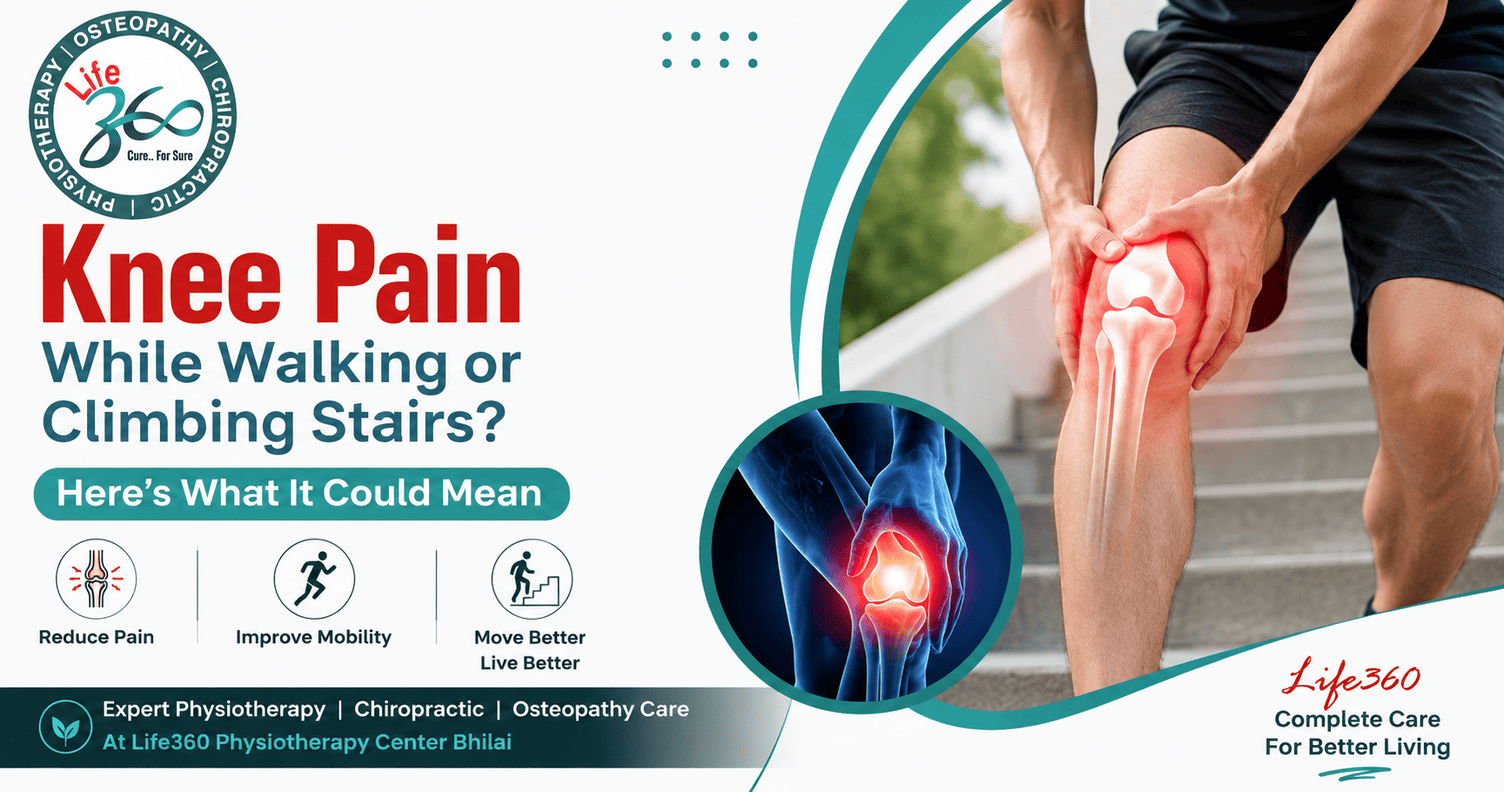
Quick Answer: Most knee pain — including early and moderate osteoarthritis — can be managed effectively without surgery through targeted strengthening, physiotherapy, manual therapy, weight management, and activity modification. In Raipur, Chhattisgarh, Life 360 Physiotherapy Center in Shankar Nagar — led by Dr. Nitu Verma, India's first lady chiropractor and Chhattisgarh Ratna Awardee — provides complete non-surgical knee care and post-surgery rehabilitation. Call 09115719395.
Does your knee hurt while climbing stairs, sitting cross-legged, or getting up from a chair? Do you hear cracking sounds, feel morning stiffness, or notice swelling after walking? Knee pain affects nearly one in four adults over 40 in India, and in Raipur we see it daily — from young gym-goers with overuse injuries to seniors with advanced knee osteoarthritis wondering if knee replacement is their only option.
Here is the good news: for most patients, it is not.
Direct Answer: In people under 40, knee pain is usually caused by ligament injuries (ACL), meniscus tears, patellofemoral pain, or overuse. Over 40, the leading cause is osteoarthritis — wear and tear of the joint cartilage.
|
Age Group |
Most Common Causes |
|---|---|
|
15–30 years |
Sports injuries — ACL tear, meniscus injury, patellofemoral pain, jumper's knee |
|
30–45 years |
Overuse, early cartilage wear, weight gain, old untreated injuries |
|
45–60 years |
Early to moderate osteoarthritis, meniscus degeneration |
|
60+ years |
Moderate to advanced osteoarthritis |
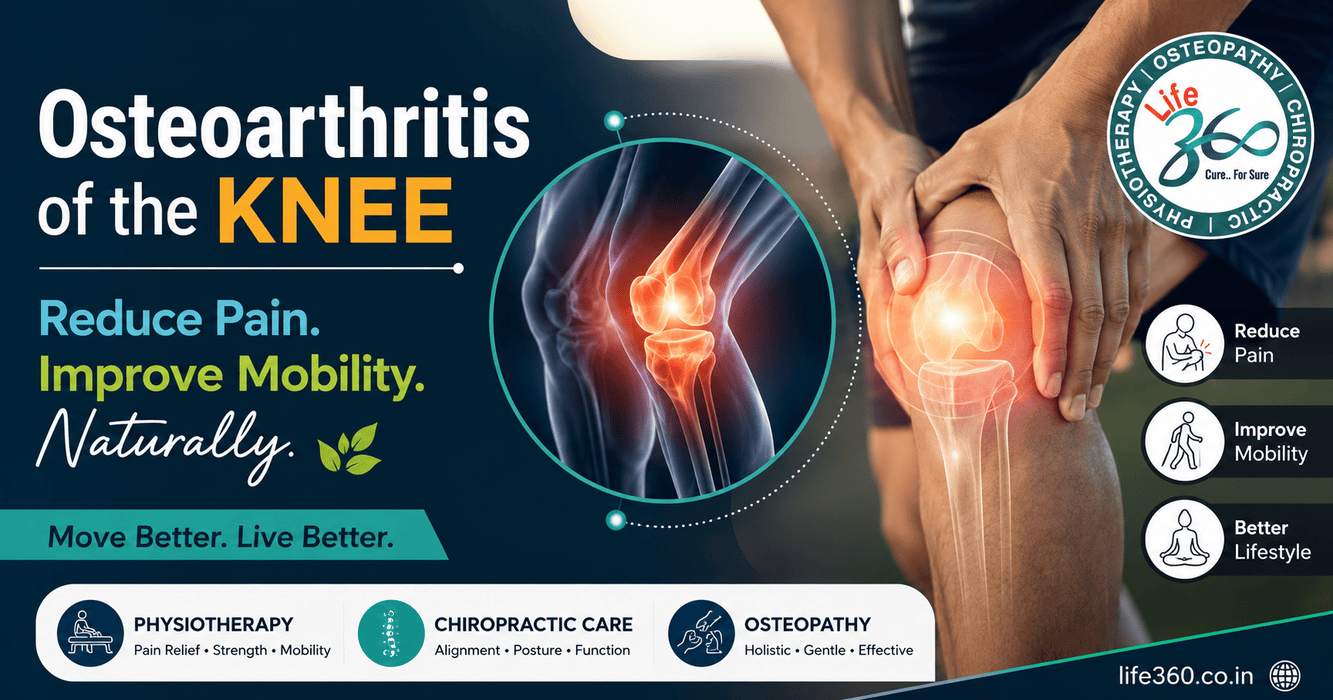
Direct Answer: Knee osteoarthritis is the gradual breakdown of the smooth cartilage covering the knee joint surfaces. As cartilage thins, bones rub, causing pain, stiffness, swelling, cracking sounds, and eventually deformity. It progresses through four grades — and grades 1 to 3 respond very well to non-surgical treatment.
Pain while climbing stairs (especially coming down), squatting, or sitting cross-legged
Morning stiffness that eases with movement (usually under 30 minutes)
Cracking, grinding sounds (crepitus) on bending the knee
Swelling after prolonged walking or standing
Pain after sitting long ("movie-goer's knee")
In later stages — bowing of the legs and constant ache
Direct Answer: Yes, in most cases. International guidelines (OARSI, ACR) state that exercise therapy is the first-line treatment for knee osteoarthritis — not surgery. Strengthening the quadriceps and hip muscles reduces knee load, decreases pain by 30–50%, and can delay or entirely avoid knee replacement in grade 1–3 arthritis.
Knee replacement is appropriate only for advanced (grade 4) arthritis with severe, constant pain that no longer responds to conservative care. If you have been advised surgery, a structured 8–12 week rehabilitation trial is worth completing first.
Progressive strengthening of the quadriceps, hamstrings, glutes, and calf — the muscles that act as your knee's natural shock absorbers. This is the single most evidence-backed treatment for knee arthritis.
Hands-on techniques improve joint glide, reduce stiffness, and relieve pain around the kneecap and joint line.
Releases tight quadriceps, IT band, and calf trigger points that overload the knee joint.
Flat feet, hip weakness, and pelvic misalignment silently overload the knees. Dr. Nitu Verma's whole-body assessment corrects these hidden contributors — a key reason our results last.
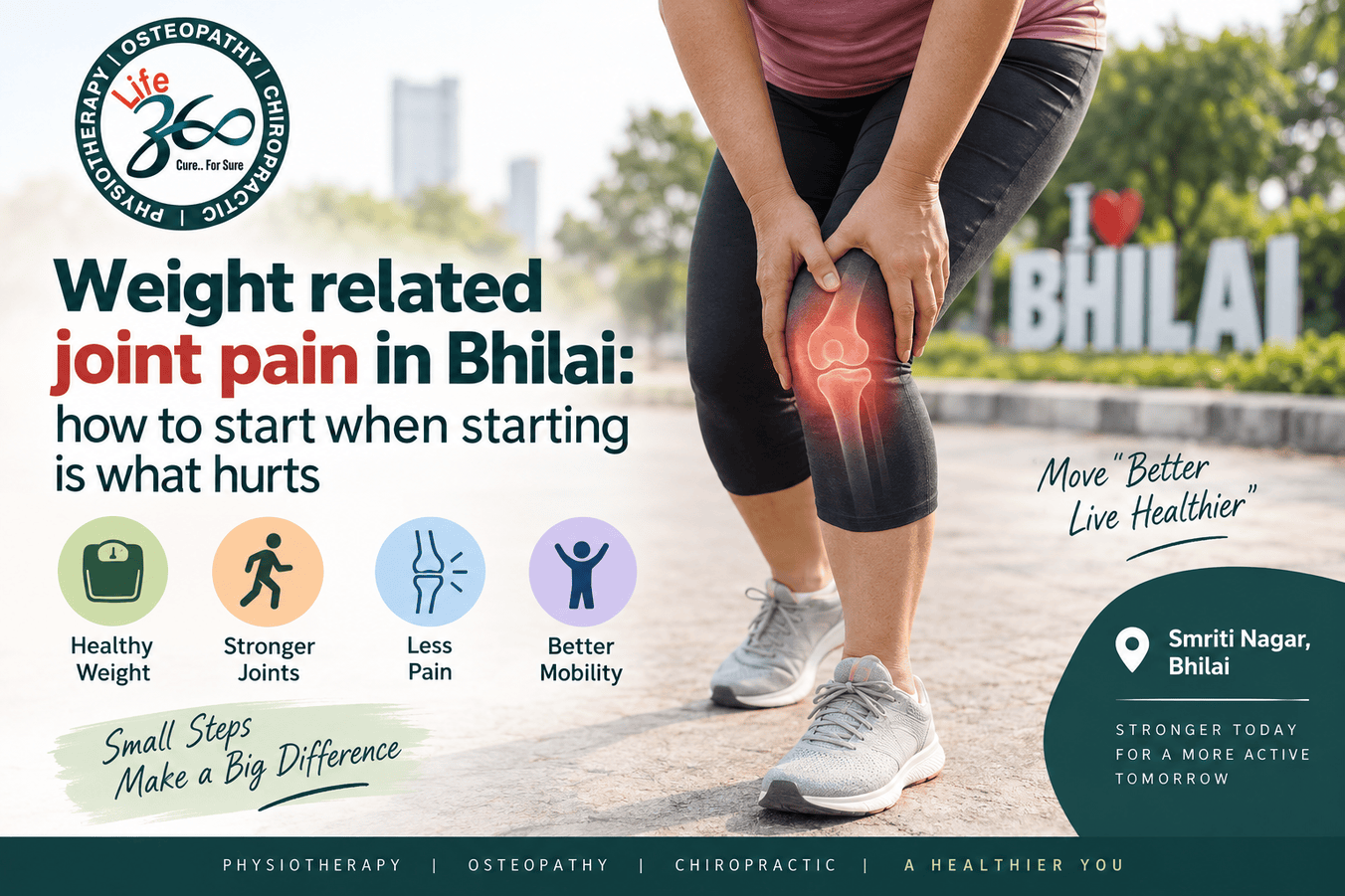
Every 1 kg of body weight adds about 4 kg of load on the knee while walking. We guide safe, joint-friendly ways to stay active and lose weight.
Complete structured rehab after knee replacement, ACL reconstruction, or meniscus surgery — restoring range, strength, and confidence to walk, climb, and return to sport.
Direct Answer: Most patients feel noticeable improvement within 3–4 weeks. A complete strengthening-based program for knee osteoarthritis runs 8–12 weeks, after which a maintenance home program keeps the knee strong. Post-surgical rehab typically takes 3–6 months depending on the procedure.
Direct Answer: The most effective evidence-based exercises are straight leg raises, quadriceps isometrics, mini squats, step-ups, hamstring curls, and stationary cycling. Avoid deep squats, full lunges, and high-impact jumping in painful stages.
Address: HIG-16, Sector 1, Shankar Nagar, Raipur, Chhattisgarh 492007
Phone: 09115719395 | 07714908010 | 07000784644
Timing: 11:00 AM – 6:00 PM
Website: https://life360.co.in
Q1. Who provides the best knee pain treatment in Raipur?
Life 360 Physiotherapy Center, Shankar Nagar, Raipur — led by Dr. Nitu Verma — is trusted across Chhattisgarh for non-surgical knee pain and osteoarthritis treatment, and for post-surgery knee rehabilitation.
Q2. Can knee arthritis be cured without knee replacement?
Grade 1–3 osteoarthritis responds very well to exercise therapy and physiotherapy — pain reduces significantly and surgery can often be delayed for years or avoided entirely. Grade 4 arthritis may eventually need replacement.
Q3. Is walking good or bad for knee arthritis?
Good — in the right dose. Regular moderate walking nourishes cartilage and strengthens muscles. Start with short walks on level ground and increase gradually. Avoid walking through sharp pain.
Q4. Why do my knees crack when I bend them?
Painless cracking is usually harmless gas release or tendon movement. Cracking with pain, swelling, or locking suggests cartilage or meniscus involvement and should be assessed.
Q5. Is climbing stairs harmful for knee pain?
Stairs load the kneecap joint 3–4 times body weight, so limit them during painful phases. As your quadriceps strengthen, stair climbing becomes comfortable again — avoiding stairs forever weakens the knee further.
Q6. Can knee pain come from the hip or feet?
Yes, very commonly. Weak hip muscles and flat feet change leg alignment and overload the knee. This is why we assess the whole lower limb, not just the knee.
Q7. What is the best exercise for knee osteoarthritis?
Quadriceps strengthening (straight leg raises, isometrics) has the strongest evidence, combined with hip strengthening and stationary cycling. A personalized program works better than generic exercises.
Q8. Do knee caps, braces, or supports help?
They can reduce pain during activity in the short term, but they do not strengthen the knee. Use them as a supplement to — never a replacement for — exercise therapy.
Q9. Is sitting cross-legged bad for knees?
In moderate to advanced arthritis, deep knee bending accelerates wear and increases pain — prefer sitting on a chair. In healthy knees, cross-legged sitting is not harmful.
Q10. How can I avoid knee replacement surgery?
Start structured strengthening early, maintain healthy weight, correct alignment problems, stay active with low-impact exercise, and treat flare-ups promptly. Most grade 1–3 patients who follow this never need surgery.
Q11. How many physiotherapy sessions are needed for knee pain?
Typically 10–20 sessions over 8–12 weeks along with a home program, depending on severity. Post-surgical rehab requires a longer structured plan.
Q12. Does knee replacement rehabilitation help after surgery?
It is essential. Without proper rehab, a replaced knee remains stiff and weak. Our structured program restores bending, strength, and natural walking within 3–4 months.
Q13. Can young people get knee arthritis?
Yes — after untreated ACL or meniscus injuries, with obesity, or with malalignment. Early treatment of injuries is the best protection.
Q14. Where can I get knee pain treatment in Chhattisgarh?
Life 360 Physiotherapy Center, HIG-16, Sector 1, Shankar Nagar, Raipur — patients visit from Bhilai, Durg, Bilaspur, Rajnandgaon, and across Chhattisgarh. Phone: 09115719395.

Dec 05, 2024

:-early-warning-signs-you-should-never-ignore-icon-044150.png)
-icon-054426.png)
-icon-080621.png)
-icon-081941.png)
-icon-092359.png)
-icon-093248.png)
-icon-094609.png)
-icon-095238.png)
-icon-103429.png)
-icon-103224.png)
-icon-104305.png)
-icon-074623.png)
-icon-075551.png)
-icon-080620.png)
-icon-081325.png)
-icon-082141.png)
-icon-083016.png)
-icon-085607.png)
-icon-090354.png)
-icon-091256.png)
-icon-092441.png)
-icon-093257.png)
-icon-094048.png)
-icon-094827.png)
-icon-095622.png)
-icon-092325.jpg)
-icon-100332.png)
-icon-101125.png)
-icon-101922.png)